



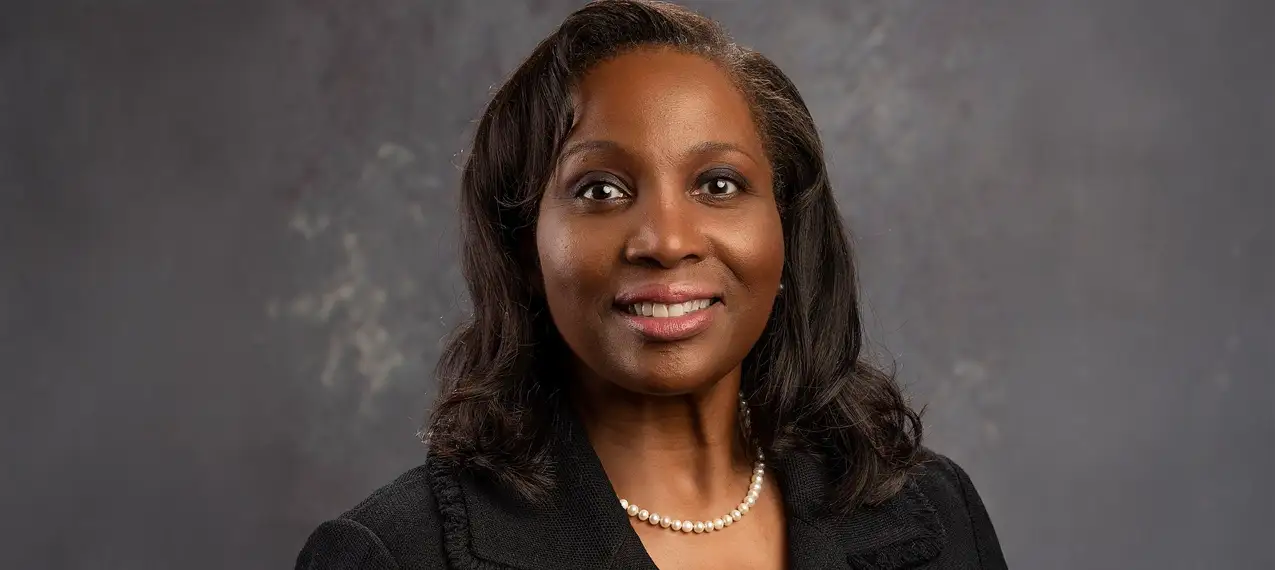
On January 21, the Supreme Court heard oral arguments in the case Trump v. Cook. The arguments centered on whether President Trump has the authority to fire Lisa Cook, a member of the Federal Reserve’s Board of Governors. President Trump relied on allegations of financial impropriety regarding a vacation property owned by Cook before she took office to justify termination of employment.1 The Court is considering this case on an emergency basis.
For context, the Federal Reserve (Fed) is the central bank of the United States, responsible for setting monetary policy to achieve economic objectives such as economic growth, employment, and price stability.2 It is an independent agency that is funded through its own interest earned on securities, whereas typical agencies are funded through the congressional appropriations process.3 The main governing body of the Fed is its Board of Governors.4
Under the Federal Reserve Act (FRA), a President may remove members of the Board of Governors “for cause,” a term that the law does not define.5 In his removal, President Trump cited allegations that Cook committed mortgage fraud before joining the Fed.6 However, even if true, the U.S. District Court for the District of Columbia ruled that the “for cause” removal provision in the FRA is best interpreted to mean that members of the Board can only be removed for things that they do while in office.7
The United States Solicitor General D. John Sauer argued on behalf of the Trump administration, contending that President Trump had good cause to remove Lisa Cook based on allegations of mortgage fraud predating her time in office.8 Solicitor General Sauer further argued that federal courts lack the authority to reinstate Cook to her position. He noted that the FRA, unlike the Civil Service Reform Act, which excludes Senate-confirmed officers, does not provide a comprehensive list of remedies for removed officers.9 Finally, Solicitor General Sauer argued that courts should avoid encroaching on the President’s discretion in removing members of the Executive Branch.10
Paul Clement, the former United States Solicitor General during the George W. Bush administration, argued on behalf of Respondent Lisa Cook. Clement argued that the FRA’s “for cause” removal requirement was intended to incorporate the preexisting grounds for removal of executive officials.11 This is reflected in statutes such as the Federal Trade Commission Act, which permits removal of Federal Trade Commissioners only for inefficiency, neglect of duty, or malfeasance in office (INM) to uphold the independence of multimember agencies.12 Clement contended that President Trump’s attempt to remove Cook undermines Congress’s carefully crafted statutory scheme in the FRA, which seeks to preserve the Board’s independence by preventing the arbitrary removal of its governors.13 He also emphasized that such officers serving for a definite term and protected by “for cause” removal provisions have historically had a right to notice and a hearing.14 Respondents also cited Marbury v. Madison, in which Chief Justice Marshall wrote that “for-cause tenure” gives rise to a property right to the office.15
In a line of questioning focused on the Federal Reserve’s uniquely structured independence, Justice Kavanaugh warned that the government’s position would invite a “search and destroy” regime at the Federal Reserve.16 He reasoned that if no meaningful judicial review were available to challenge the basis for-cause removal, any president, regardless of party, could be incentivized to come up with “trivial or inconsequential allegations” as a pretext to “search and destroy…[with] no judicial review, no process, nothing.”17 This exchange suggests that Justice Kavanaugh was attuned to the real-world consequences of unleashing this authority, particularly in light of the Federal Reserve’s unique independence given its central role in both the domestic and global economy.
Justice Kagan also expressed skepticism, pushing back on the government’s claim that no notice or hearing was required to remove Cook because the FRA lacks an inefficiency, neglect, or malfeasance standard. She noted that under the government’s view, the President could simply say, “Ms. Cook, you’re fired,” without any formal process. Her questioning highlighted the concern that removing a board member without a clear procedure would leave no way to substantiate the reasons for removal or to ensure that it was not based on a policy disagreement. This standard could undermine the Federal Reserve’s independence. Solicitor General Sauer’s response offered little reassurance on the point, repeating that the President needs only to provide a cause related to conduct to remove Cook.18
When Respondent’s counsel Paul Clement took the floor, Justice Thomas immediately raised a key question: “But, if there was such a concern for independence, could the removal statute have been written as others have been written to require a hearing and review?”19 Clement responded that the historical context of the FRA’s passage in 1914 matters. At the time, “for cause” was commonly understood to include traditional grounds like inefficiency, malfeasance in office, or ineligibility. 20 Clement also warned against reading too much into Congress’s silence, arguing that “it would be a mistaken statutory interpretation to make that one express reference to a hearing sort of disable all the other old-soil arguments to all the other institutions . . ..” 21 In short, Clement contended, the absence of a hearing requirement in the FRA should not be read to invalidate its for-cause removal protections.
Justice Alito posed hypotheticals testing the extent Cook’s team would defend their argument for limiting presidential removal powers. He asked counselor Clement if pro-Hitler rhetoric and offensive speech would constitute for-cause.22 This line of questioning was further explored by Justice Barrett, who probed Cook’s distinction between in-office charges and out-of-office charges to explore the relevance of a wrongdoing’s severity.23 In both scenarios, Clement defended removal limitations, stating the proper interpretation of for-cause firing would prevent an employee from being fired for minor offenses.24
Whether the President can remove Cook from her position before the case is resolved will likely be answered quickly. Based on most of the Justices’ reactions to the Solicitor General’s arguments, the court appears inclined to permit Lisa Cook to remain in her position as a Governor of the Federal Reserve. Such a ruling is consistent with the Court’s Federal Reserve jurisprudence and would reaffirm its commitment to preserving the Federal Reserve’s independence. No matter which party wins, Landmark remains committed to upholding constitutional principles and championing separation of powers principles.
Footnotes
- Christopher Rubager & Will Weissert, Trump says he’s firing Fed Governor Lisa Cook, opening new front in fight for central bank control, The Associated Press (Aug. 26, 2025), https://apnews.com/article/federal-reserve-lisa-cook-trump-6fca3d2fbb54ba204cc91398e6a7b020. ↩︎
- The Federal Reserve Explained, Federal Reserve.gov, https://www.federalreserve.gov/aboutthefed/fedexplained/who-we-are.htm (last visited Jan. 21, 2026). ↩︎
- Janet Siroto, How Do Federal Reserve Banks Get Funded?, SoFi Learn (Jul. 29, 2024), https://www.sofi.com/learn/content/how-do-fed-rates-get-funded/#:~:text. ↩︎
- The Federal Reserve Explained, Federal Reserve.gov, https://www.federalreserve.gov/aboutthefed/fedexplained/who-we-are.htm (last visited Jan. 21, 2026). ↩︎
- Federal Reserve Act, 12 U.S.C. § 242. ↩︎
- Reply of Applicant Donald J. Trump, Trump v. Cook, No. 25A312 (U.S. Sep. 26, 2025). ↩︎
- Cook v. Trump, No. 25-cv-2903, at 22 (D.D.C. Sep. 9, 2025). ↩︎
- Transcript of Oral Argument at 3, Trump v. Cook, No. 25-5326 (U.S. argued Jan. 21, 2026). ↩︎
- Id. at 6; The Civil Service Reform Act of 1978, 5 U.S.C.S. §§ 7701-7703. ↩︎
- Transcript of Oral Argument at 8, Trump v. Cook, No. 25-5326 (U.S. argued Jan. 21, 2026). ↩︎
- Id. at 69-71. ↩︎
- Federal Trade Commission Act, 15 U.S.C. § 41. ↩︎
- Transcript of Oral Argument at 70-71, Trump v. Cook, No. 25-5326 (U.S. argued Jan. 21, 2026); Federal Reserve Act, 12 U.S.C. § 242. ↩︎
- Transcript of Oral Argument at 71-72, Trump v. Cook, No. 25-5326 (U.S. argued Jan. 21, 2026). ↩︎
- Supplemental Brief for Respondent Lisa D. Cook at 16, Trump v. Cook, No. 25A312 (U.S. Nov. 19, 2025). ↩︎
- Transcript of Oral Argument at 52, Trump v. Cook, No. 25-5326 (U.S. argued Jan. 21, 2026). ↩︎
- Id. at 53. ↩︎
- Id. at 32. ↩︎
- Id. at 70. ↩︎
- Id. at 71. ↩︎
- Id. at 71-72. ↩︎
- Id. at 77. ↩︎
- Id. at 97-100. ↩︎
- Id. at 100. ↩︎
RECENT POSTS
 Landmark Files Amicus Brief in Relentless v. Department of Commerce
 SCOTUS May Keep Lisa Cook at the Fed, Preserving Independence
 Victory! Supreme Court Expands Candidate Standing In Election Law Challenges!
 Landmark Submits Comments Supporting Anti-Debanking Regulations
 Victory! Appeals Court Agrees with Landmark – Rules Congress can Defund Planned Parenthood
SUPPORT LANDMARK LEGAL FOUNDATION
We are truly facing existential threats to our individual rights and liberties, the Constitution, and our national character. If unchallenged, this assault on our very way of life will ruin our great nation. With your financial and moral support, Landmark is not going to let that happen without a fight. Will you join us?
JOIN OUR MAILING LIST
Never miss an update from Landmark Legal Foundation as we continue the fight to preserve America’s principles and defend the Constitution from the radical left.