



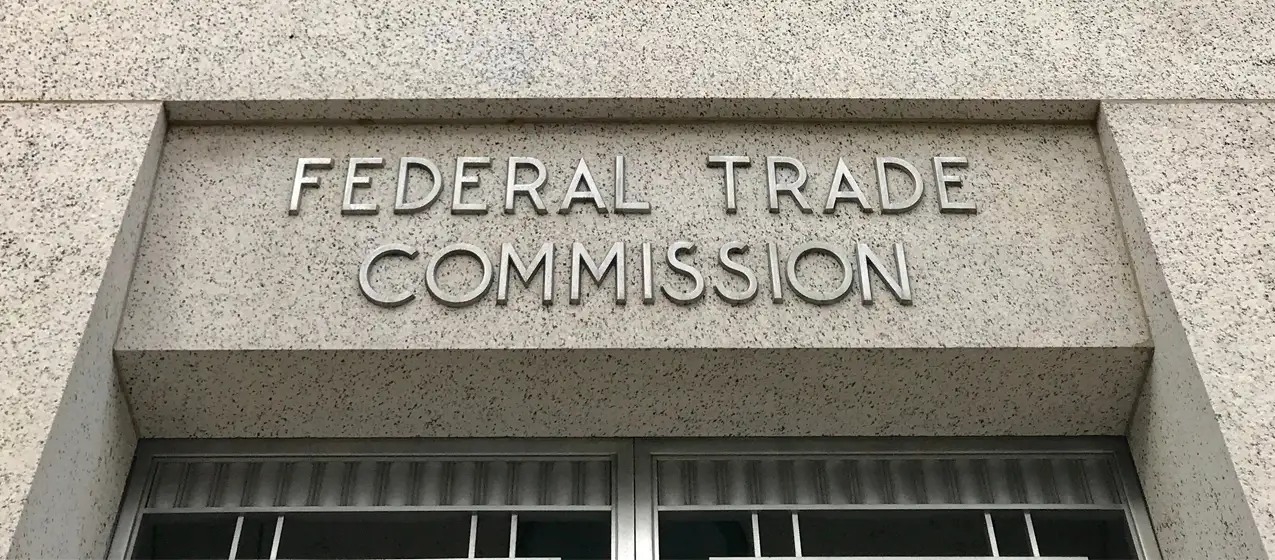
On December 8, the Supreme Court heard oral arguments in Trump v. Slaughter, a case that arrived on appeal from the D.C. Circuit Court of Appeals. This dispute began in March of 2025, when President Trump removed Federal Trade Commissioner Rebecca Kelly Slaughter pursuant to what he described as his authority under Article II of the Constitution, which vests all executive power in the President of the United States.1 The Court will consider whether the statutory removal protections for Federal Trade Commission (FTC) officials violate the separation of powers, and, if so, whether Humphrey’s Executor v. United States should be overturned.2 The Supreme Court ruling in Humphrey’s Executor in 1935 established that the President cannot remove independent agency leaders without cause.3 A ruling in favor of the government would give the President the authority to remove independent agency heads at will. Other agencies likely implicated by this ruling include the Merit Systems Protections Board, the National Labor Relations Board, and the Consumer Product Safety Commission.
Landmark Legal Foundation filed an amicus brief in support of the Petitioner, President Trump. We argue that the logic behind Humphrey’s Executor was clearly wrong from the outset and that it has had a cascade of bad effects.4 For starters, the FTC began as an executive agency in 1935 and remains one today. The agency’s main purpose—regulating competitive markets and enforcing antitrust laws—is executive, and as such they should be considered subordinates of the head of the executive branch, the President. This was the understanding put forth in Myers v. United States, a 1926 decision written by President and then-Chief Justice William Howard Taft holding that Presidents can remove those wielding executive authority at will.5 This should have decided Humphrey’s Executor, but instead the Court found the FTC to be uniquely independent, wielding quasi-legislative and quasi-judicial powers—as opposed to purely executive.6 Landmark argues that this distinction was never coherent and empowered a large number of unelected bureaucrats—unaccountable to the President, and thus to the American people—to wield executive power over Americans.7 Our brief similarly criticizes the claim that supporters of an unchecked administrative state make when they say that unaccountability is an unfortunate but necessary feature of rule by experts.8 This bargain hardly seems worth it when organizations like the FTC are filled almost entirely with partisan lawyers pulled from Senate staff rather than industry leaders or even antitrust academics.9
At oral arguments, United States Solicitor General D. John Sauer argued on behalf of the government.10 His central claim was that because the Constitution vests all executive power in the President, the President must have control over executive officers, including the power to remove them at will. This was the traditional understanding of removal powers until Humphrey’s Executor in 1935.11 He contended that FTC’s statutory removal protections violate Article II of the Constitution and the separation of powers, and that overruling Humphrey’s Executor would restore democratic accountability by ensuring that the executive branch is accountable to the American people.
The questioning from the Justices was aimed at clarifying the downstream effects of these competing visions of Article II. Solicitor General Sauer was pressed on whether overturning Humphrey’s Executor would enable the firing of a slew of other federal agents, including Federal Reserve Governors, career civil servants, and Article I officials like U.S. Tax Court judges. Justice Kagan led the charge to point out what she views as disruptive consequences of the Administration’s theory, as she has in the past. To her, “it does not seem as though there’s a stopping point.”12 The Administration does hold that the long history of American central banking and its semi-private structure insulate the Federal Reserve’s leadership from future constitutional challenges, and Justice Kavanaugh went so far as to clearly state his interest in distancing the Fed from the Court’s ruling in this case.13 Nevertheless, the Court’s liberals seemed unconvinced by the significance of this distinction or, at least, the constitutional justification for it. Justice Sotomayor took Justice Kagan’s more measured arguments on this topic to the extreme, claiming to the Solicitor General that “[y]ou’re asking us to destroy the structure of the government.14How this could possibly follow from increased turnover among regulatory agency heads is unclear. Moreover, the majority of recent FTC commissioners have resigned early by their own volition, averaging less than one presidential term even in the era of removal 15
Amit Agarwal argued on behalf of the Respondent, former FTC Commissioner Rebecca Kelly Slaughter. It became clear very quickly that he faced an uphill battle defending a famously unconvincing decision that Justice Gorsuch even called “poorly reasoned” in argument.16 Given the challenge of defending the substance of Humphrey’s Executor, he resorted to defending the case more generally as a longstanding precedent. And given that several statutory provisions find their basis in the case, he used the opportunity to criticize the Trump Administration for even raising this issue, claiming the “President’s constitutional duty to execute the law does not give him the power to violate that law with impunity.”17
Agarwal did make some arguments defending Humphrey’s Executor’s decision, however, citing 18th Century historical analogues to organizations like the FTC with removal protections.18 Justice Barrett’s questioning critically undercut this assertion. She reminded Mr. Agarwal that the structure of early American regulatory bodies like the Sinking Fund Commission enabled the President to remove and replace the majority of members, thereby overseeing the Fund’s activities.19 Given that Justice Barrett is the only conservative Justice on the Court who had not previously joined opinions on this topic, this line of questioning was notable. It strongly implies that she agrees with the other conservative Justices and is likely to rule against Humphrey’s Executor.
A decision in this case is slated to be released by the end of the term in early summer 2026. And based on the majority of the Justices’ reactions to the Solicitor General’s argument, it seems likely that, at long last, Humphrey’s Executor will be overturned. This would be a major correction of bad law and a victory for organizations like Landmark that have spent years advocating for serious enforcement of the separation of powers. It would also reaffirm to the American people that those who wield executive power over them must be accountable to their elected President. As the Framers knew well, accountability and responsiveness to voters are at the heart of what it means to have a government of the people, by the people, and for the people.
Footnotes
- Memorandum in Support. of Defendants’ Cross-Motion for Summary Judgment & Opposition to Plaintiffs’ Motion for Summary Judgment, Slaughter v. Trump, No. 1:25-cv-00909 (D.D.C. Apr. 23, 2025), ECF No. 33, at 8. ↩
- Humphrey’s Ex’r v. United States, 295 U.S. 602 (1935). ↩
- Id. ↩
- Brief of Amicus Curiae Landmark Legal Foundation in Support of Petitioner, Trump v. Slaughter, No. 25-332 (U.S. Oct. 17, 2025). ↩
- Myers v. United States, 272 U.S. 52 (1926). ↩
- Humphrey’s Ex’r v. United States, 295 U.S. 602, 628 (1935). ↩
- Brief of Amicus Curiae Landmark Legal Foundation in Support of Petitioner, Trump v. Slaughter, No. 25-332 (U.S. Oct. 17, 2025). ↩
- Id. ↩
- Former Commissioners, Fed. Trade Comm’n, https://www.ftc.gov/about-ftc/commissioners-staff/former-commissioners (last visited Dec. 9, 2025). ↩
- Trump v. Slaughter, No. 25-332, at 3-4 (U.S. argued Dec. 8, 2025) (transcript). ↩
- Humphrey’s Ex’r v. United States, 295 U.S. 602 (1935). ↩
- Trump v. Slaughter, No. 25-332, at 19 (U.S. argued Dec. 8, 2025) (transcript). ↩
- Id. at 56. ↩
- Id. at 11. ↩
- Former Commissioners, Fed. Trade Comm’n, https://www.ftc.gov/about-ftc/commissioners-staff/former-commissioners (last visited Dec. 9, 2025). ↩
- Trump v. Slaughter, No. 25-332, at 141 (U.S. argued Dec. 8, 2025) (transcript). ↩
- Trump v. Slaughter, No. 25-332, Oral Arg. Tr. at 73 (U.S. Dec. 8, 2025) (transcript). ↩
- Id. at 74. ↩
- Id. at 159. ↩
RECENT POSTS
 SCOTUS May Keep Lisa Cook at the Fed, Preserving Independence
 Victory! Supreme Court Expands Candidate Standing In Election Law Challenges!
 Landmark Submits Comments Supporting Anti-Debanking Regulations
 Victory! Appeals Court Agrees with Landmark – Rules Congress can Defund Planned Parenthood
 Court Signals Possible Overturn of Humphrey’s Executor v. United States Oral Arguments
SUPPORT LANDMARK LEGAL FOUNDATION
We are truly facing existential threats to our individual rights and liberties, the Constitution, and our national character. If unchallenged, this assault on our very way of life will ruin our great nation. With your financial and moral support, Landmark is not going to let that happen without a fight. Will you join us?
JOIN OUR MAILING LIST
Never miss an update from Landmark Legal Foundation as we continue the fight to preserve America’s principles and defend the Constitution from the radical left.